
Investment Vehicles and Due Diligence for the Space Economy and New Space Ventures
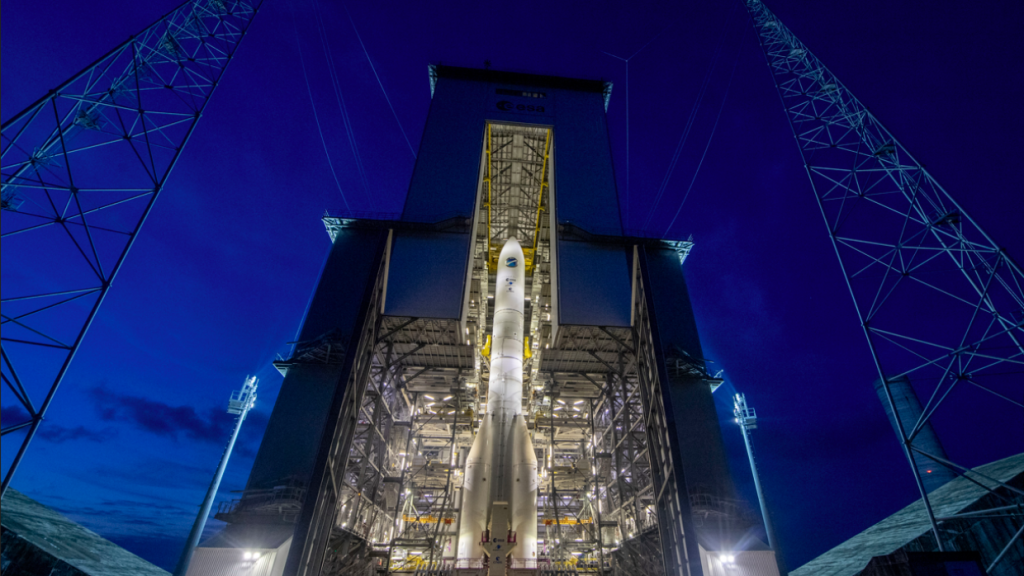
Let’s be honest, the idea of investing in space used to feel like science fiction. Today? It’s a burgeoning, multi-billion-dollar reality. The “space economy” isn’t just about rockets and satellites anymore—it’s about the data they collect, the materials they might mine, and the new technologies they force us to invent. It’s a frontier, and like any frontier, it’s packed with both dizzying opportunity and… well, let’s call it significant risk.
So, how do you actually get a piece of this? And more importantly, how do you do it without your investment vanishing into the void? The answer lies in understanding the unique investment vehicles available and, crucially, applying a special kind of due diligence. Let’s dive in.
Navigating the Cosmos of Investment Vehicles
You can’t just buy a ticket on a rocket (well, unless you’re a tourist). For most of us, investing requires a conduit. The landscape here is evolving fast, but here are the primary paths for capital to reach the stars.
Public Markets: The Established Constellations
Think of these as the more visible, “blue-chip” options. We’re talking about publicly traded companies like SpaceX (still private, actually), Rocket Lab, or established aerospace giants like Lockheed Martin. But there’s a newer breed: Special Purpose Acquisition Companies (SPACs) became a popular, if controversial, launchpad for space startups to go public quickly.
The deal with public markets? Liquidity. You can buy and sell shares relatively easily. But you’re often buying a piece of a large, complex organization where the “space” segment might be just one part of the story. The volatility can be… astronomical.
Venture Capital & Private Equity: Fueling the Launchpad
This is where the real action is for new space ventures. Venture capital firms specifically focused on deep tech and aerospace are the lifeblood for early-stage companies. They provide the capital for R&D, prototyping, and that all-important first launch. The catch? This arena is typically reserved for accredited investors with high risk tolerance and long time horizons. Your money is locked up, illiquid, for years.
ETFs and Thematic Funds: A Diversified Portfolio in a Box
For many, this is the most sensible entry point. Exchange-Traded Funds (ETFs) like the Procure Space ETF (UFO) or the SPDR S&P Kensho Final Frontiers ETF (ROKT) bundle a basket of space-related public companies. It’s a way to gain broad exposure to the space economy investment trend without betting the farm on a single startup’s untested engine. You mitigate single-company risk, which, in this sector, is a very smart move.
Crowdfunding and Syndicates: The Democratization of Space Finance
A newer, fascinating model. Platforms like StartEngine or AngelList allow smaller investors to pool funds into specific space startups. It opens the door for non-VCs to take an equity stake in early-stage ventures. The minimums are lower, but the risks are, if anything, even higher. Due diligence here falls heavily on you.
The Non-Negotiable: Space-Specific Due Diligence
Okay, you’ve picked a vehicle. Now for the hard part. Evaluating a space venture isn’t like looking at a SaaS company. The technical, regulatory, and financial hurdles are in a different stratosphere. Here’s what you absolutely must scrutinize.
1. Technical Feasibility and The “Moonshot” Trap
Everyone loves a visionary founder. But vision without physics is just a dream. You need to assess the core technology. Is it incremental improvement or a fundamental breakthrough? Ask: Have they built a prototype? Have they conducted successful tests? What are the opinions of independent aerospace engineers? Be wary of companies claiming to reinvent propulsion without peer-reviewed data or demonstrable milestones.
2. The Regulatory Launch Environment
A rocket isn’t a web app. You can’t just deploy it. In the U.S., the FAA regulates launch licenses; the FCC manages spectrum for satellites; NOAA licenses remote-sensing systems. It’s a maze. A key part of due diligence for space ventures is understanding where the company is in this regulatory process. Have they secured necessary licenses? What are the potential hurdles? A delay here can mean bankruptcy.
3. The Business Model: Beyond the Launch
“We’re going to launch satellites” is not a business model. Is it a launch service? Satellite manufacturing? Data analytics? Space tourism? You need to see a clear path to revenue. For downstream applications—like using Earth observation data for agriculture or insurance—ask about the sales pipeline and customer acquisition costs. Who is actually paying, and how soon?
Let’s look at a quick comparison of risk profiles:
| Vehicle Type | Risk Profile | Liquidity | Due Diligence Burden |
| Public Space ETFs | Moderate | High | Low (Fund manager does it) |
| Direct VC in Startup | Very High | Very Low | Extremely High |
| Crowdfunding Campaign | Extremely High | Nonexistent | On the Investor |
| Public Aerospace Giant | Moderate-Low | High | Moderate (Analyze segment focus) |
4. The Team: Rocket Scientists and… Business Scientists
A brilliant engineering team is table stakes. But do they have someone who understands supply chain logistics for radiation-hardened components? Or a CFO who can navigate the unique accounting of multi-year, milestone-driven government contracts? The team needs that hybrid expertise—stellar technical chops grounded in earthly business execution.
5. Capital Intensity and Runway
Space is brutally capital intensive. One launch failure can wipe out years of cash. You must examine the burn rate and the runway. How many funding rounds will they need before becoming cash-flow positive? What are the upcoming, expensive milestones (e.g., “first orbital launch”)? Is there a credible plan to get to the next funding round without a Hail Mary?
Final Thoughts: Keeping Your Feet on the Ground
Investing in the space economy is, in many ways, a bet on a specific future. It’s thrilling. But the siren song of “the final frontier” can cloud judgment. The most successful investors in this sector blend optimism with profound skepticism.
They ask the hard technical questions. They parse regulatory filings. They look for real revenue, not just press releases about “memorandums of understanding.” They diversify—maybe through an ETF for broad exposure, then a smaller, speculative bet on a private venture they’ve vetted obsessively.
The space economy will be built, but not every company will be a part of that construction. Your job is to find the ones with not just a dream of the stars, but a detailed map, a capable crew, and enough fuel for the long, uncertain journey ahead. The view from orbit is spectacular, but only if you make it there.
About Author
