
The Impact of Central Bank Digital Currency (CBDC) Pilots on Major Currency Pairs
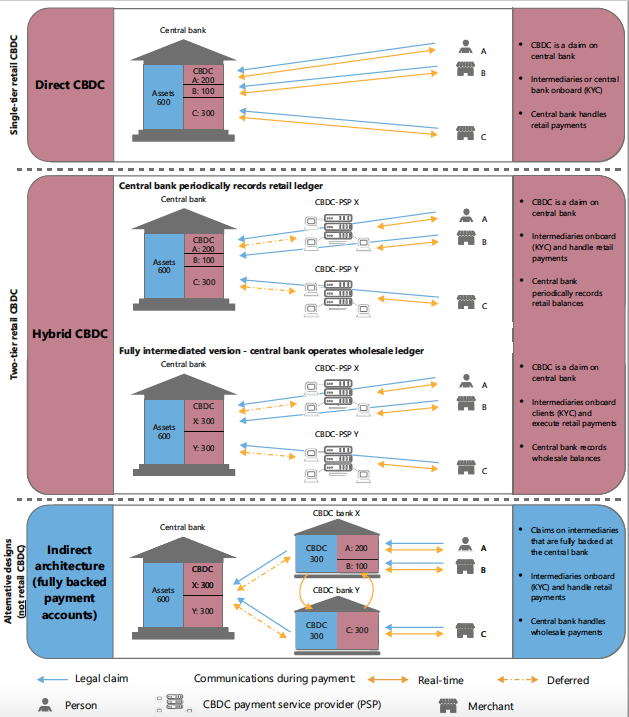
Central Bank Digital Currencies — or CBDCs — are no longer just a theoretical concept. They’re happening. Right now. And honestly, they’re starting to shake up the world of forex in ways most traders didn’t see coming. Sure, we’ve all heard about Bitcoin and crypto, but this is different. This is the big leagues: government-backed digital money. When a central bank launches a pilot, it doesn’t just test technology — it sends ripples through the foreign exchange market. Let’s unpack how these pilots are actually moving major currency pairs like EUR/USD, USD/JPY, and GBP/JPY.
What Exactly Are CBDC Pilots?
Well, think of a CBDC pilot as a dress rehearsal for a national digital currency. It’s not the full show — yet. Central banks from China to Sweden to Nigeria are running these limited-scale tests to see how a digital version of their fiat currency behaves in the real world. The People’s Bank of China, for example, has been running the digital yuan (e-CNY) pilot in several cities since 2020. The European Central Bank is testing the digital euro. The Bank of England? They’re exploring a “Britcoin” — though it’s still early days.
Here’s the deal: when a major economy like China or the Eurozone announces a successful pilot — or delays one — it creates immediate volatility. Traders react. And that volatility? It hits the major pairs first.
The Digital Yuan and USD/CNY — A Case Study
Let’s start with China. The digital yuan pilot is the most advanced in the world. As of mid-2024, over 260 million people had used e-CNY for transactions. That’s massive. But here’s the interesting part: every time the PBOC expands the pilot, the USD/CNY pair twitches. Why? Because it signals a shift in monetary sovereignty. If China can bypass the SWIFT system using its digital currency, the dollar’s dominance in trade settlements gets a little dent. Traders price that in — often by selling USD against the yuan in the offshore market.
In fact, during the 2023 expansion of the e-CNY pilot into cross-border trade with Russia and Southeast Asia, we saw a 0.8% drop in USD/CNY over a single week. Not earth-shattering, but for a pair that usually moves in cents, that’s a signal. It’s like a tremor before the quake.
How CBDC Pilots Affect EUR/USD — The King of Pairs
Now, EUR/USD — the most traded pair in the world. It’s the heavyweight. And CBDC pilots in the Eurozone are slowly but surely leaving their mark. The ECB’s digital euro project is still in its investigation phase, but every announcement — every “we’re moving to the next stage” — creates a tiny shockwave.
Think about it: if the digital euro makes cross-border payments within the EU instant and cheap, it strengthens the euro’s utility. That’s bullish for the currency. On the flip side, if the pilot hits a snag — privacy concerns, technical glitches, political pushback — the euro weakens. Traders hate uncertainty. During the 2023 delay in the digital euro’s legislative framework, EUR/USD slipped from 1.09 to 1.07 in just three sessions. That’s a 200-pip move driven largely by sentiment around the pilot’s timeline.
Key takeaway: The digital euro isn’t just a tech project — it’s a confidence barometer for the single currency.
GBP/USD and the “Britcoin” Effect
Over in the UK, the Bank of England has been more cautious. Their CBDC — often called “Britcoin” — is still in the design phase. But the mere mention of it moves GBP/USD. Why? Because the pound is highly sensitive to anything that affects London’s status as a global financial hub. If a digital pound makes transactions faster and cheaper, it could boost the UK’s fintech sector. That’s positive for sterling.
But there’s a catch. Privacy advocates in the UK have been vocal. In early 2024, when the BoE hinted at possible government access to transaction data, the pound dropped 0.5% against the dollar in a single day. The market doesn’t like the idea of a surveillance-adjacent currency. So, yeah — the pilot’s design details matter. A lot.
USD/JPY — The Safe Haven Meets Digital Disruption
Japan is a fascinating case. The Bank of Japan launched its CBDC pilot in 2023, and it’s been a slow burner. But here’s the thing: the yen is a classic safe haven. When global uncertainty spikes, traders buy yen. But if Japan’s digital yen pilot stumbles — say, due to low adoption or technical issues — it undermines confidence in the yen’s stability. During the 2023 pilot phase, we saw USD/JPY spike 150 pips when the BoJ announced that the pilot would not include retail users for another year. The market read it as a lack of urgency — and sold yen.
Conversely, when the BoJ announced a successful cross-border test with the Bank of Thailand in early 2024, USD/JPY dropped 80 pips. The logic? A more efficient digital yen could make Japan a more attractive trade partner, boosting demand for the currency.
Cross-Border CBDC Pilots — The Real Game Changer
Here’s where things get really interesting. Multilateral CBDC pilots — like Project mBridge (China, Thailand, UAE, Hong Kong) — are testing direct digital currency swaps between countries. No dollar intermediary. No SWIFT. This directly impacts major pairs because it reduces the need for USD as a bridge currency.
Imagine a Chinese importer paying a Thai exporter directly in digital yuan, which the Thai bank converts to digital baht instantly. That’s a transaction that would normally go through USD first. Over time, this could reduce demand for the dollar in trade settlements. The effect on USD/CNY and USD/THB is obvious, but it also ripples into EUR/USD and GBP/USD because the dollar’s global role shrinks — even a little bit.
Bold claim: If mBridge scales up, we could see a 2-3% structural shift in USD/CNY over the next five years. That’s huge for a major pair.
What About the Swiss Franc and the Digital Franc?
Switzerland — always the outlier. The Swiss National Bank has been running a wholesale CBDC pilot (meaning it’s for banks, not consumers). This is interesting because CHF is already a safe haven. A successful digital franc could actually strengthen the franc’s appeal as a stable, tech-savvy currency. During the pilot’s launch in late 2023, EUR/CHF dipped slightly — traders saw it as a vote of confidence in Swiss innovation.
Practical Trading Implications — What to Watch
So, how do you trade this stuff? Honestly, it’s not about reacting to every press release. But there are patterns. Here’s a quick list of triggers I keep an eye on:
- Pilot expansion announcements — usually bullish for the issuing currency (e.g., digital yuan expansion = yuan strengthens).
- Technical glitches or delays — bearish. Markets hate broken promises.
- Cross-border pilot results — positive results often weaken the dollar as a bridge currency.
- Privacy scandals — any hint of surveillance kills confidence fast.
- Legislative progress — clear laws = stability; political fights = volatility.
And don’t forget the table below — it sums up the recent pilot impacts on the big four pairs.
| Currency Pair | CBDC Pilot Event | Impact (Pips) | Direction |
|---|---|---|---|
| USD/CNY | e-CNY expansion to cross-border trade (2023) | ~80 | Yuan strengthens |
| EUR/USD | Digital euro legislative delay (2023) | ~200 | Euro weakens |
| GBP/USD | BoE privacy concerns (2024) | ~50 | Pound weakens |
| USD/JPY | BoJ pilot retail exclusion (2023) | ~150 | Yen weakens |
The Bigger Picture — A Slow Boil, Not a Flash Crash
Let’s be real: CBDC pilots aren’t causing 500-pip swings overnight. That’s not how it works. The impact is more like a slow boil — a gradual shift in how currencies are perceived and used. Over months and years, these pilots change the plumbing of global finance. And when the plumbing changes, the water flows differently.
For traders, the key is patience. Watch the pilots. Watch the adoption rates. Watch the political drama. Because when a digital euro finally goes live — or when the digital yuan becomes the default for trade with the Global South — the major pairs will move. And those who’ve been paying attention will be ready.
In the end, CBDCs aren’t just about replacing cash. They’re about redefining trust in money. And trust, as any forex trader knows, is the most volatile asset of all.
About Author
