
Tax-Efficient Charitable Giving Strategies for Millennials: Smart Ways to Give More
Let’s be honest. As a millennial, you’re probably juggling student loans, maybe a mortgage, and trying to save for the future—all while wanting to make a positive impact. The idea of charitable giving can feel…daunting. Like something for later, when you’re “wealthy.”
But here’s the deal: you don’t need a trust fund to be a strategic philanthropist. In fact, understanding a few key tax-efficient charitable giving strategies can stretch your donation dollars further. It lets you support causes you care about and keep your own financial health in check. It’s a win-win, you know?
Why Millennials Should Think About Tax Strategy
First, a quick mindset shift. “Tax-efficient” doesn’t mean you’re gaming the system. It simply means you’re being thoughtful—ensuring the maximum amount of your hard-earned money goes to the charity, not lost to unnecessary taxes. With the standard deduction being pretty high now ($14,600 for single filers in 2024), just writing a check might not give you a tax benefit. You have to get a bit clever.
And honestly, this aligns perfectly with the millennial ethos. We want transparency, efficiency, and impact. Our giving should reflect that too.
Strategy #1: Bunching Donations with a Donor-Advised Fund (DAF)
This is, hands down, one of the most powerful tools for young professionals. Think of a Donor-Advised Fund (DAF) as a charitable investment account. You contribute cash, stocks, or other assets into the fund and get an immediate tax deduction for the year you contribute. Then, you can recommend grants from the fund to your favorite charities over time.
How This Works for You
Let’s say you normally give $3,000 to charity each year. With the high standard deduction, you get no extra tax break for those gifts. Instead, you “bunch” three years’ worth of giving ($9,000) into one DAF contribution this year. Suddenly, you have enough deductions to itemize and claim a tax benefit. Then, you can dole out that $9,000 from the DAF to charities over the next three years on your own schedule.
Key takeaway: Bunching via a DAF turns small, annual gifts into a larger, tax-advantaged charitable lump sum. It’s a game-changer.
Strategy #2: Donating Appreciated Stock (Not Cash)
So you’ve got some stocks or ETFs in a brokerage account that have gone up in value. If you sell them, you owe capital gains tax on that profit. But if you donate those shares directly to a charity or your DAF? Well, you avoid the capital gains tax entirely.
And you still get to deduct the full fair-market value of the stock. This is arguably one of the most underutilized tax-smart giving methods out there.
Imagine you bought stock for $1,000 that’s now worth $5,000. Donate the shares, and the charity gets the full $5,000. You get a $5,000 deduction. And you never pay tax on that $4,000 gain. It’s like a double benefit.
Strategy #3: Leveraging Your Retirement Accounts
This one’s a bit more niche but powerful if it applies. If you’re over 70½, you can make a Qualified Charitable Distribution (QCD) directly from your IRA to a qualified charity. It counts toward your Required Minimum Distribution (RMD) but isn’t included in your taxable income.
Now, most millennials aren’t taking RMDs yet. But the point is to plant the seed—this is a fantastic strategy for future giving, especially if you expect to have significant retirement savings. It’s worth knowing the playbook exists.
Practical Mix-and-Match Approaches
Okay, so how might this look in real life? Let’s sketch out a scenario for a millennial couple.
| Your Situation | Traditional Approach | Strategic, Tax-Efficient Approach |
| You have $5,000 in appreciated stock (cost basis $1,000) and $2,000 cash you want to give. | Sell the stock, pay ~15% capital gains tax on $4,000 profit ($600), donate the remaining $4,400 + $2,000 cash = $6,400 total to charity. Deduction may not exceed standard deduction. | Donate the $5,000 in stock directly to a DAF. Contribute the $2,000 cash to the DAF. Get a $7,000 charitable deduction in one year (enabling itemizing). DAF distributes to charities. You avoid $600 in capital gains tax. |
| End Result | Charity gets $6,400. You get minimal tax benefit. | Charity gets $7,000. You get a larger tax deduction and keep more of your own money. |
Common Pitfalls to Sidestep
Sure, it’s not all smooth sailing. A few things to watch for:
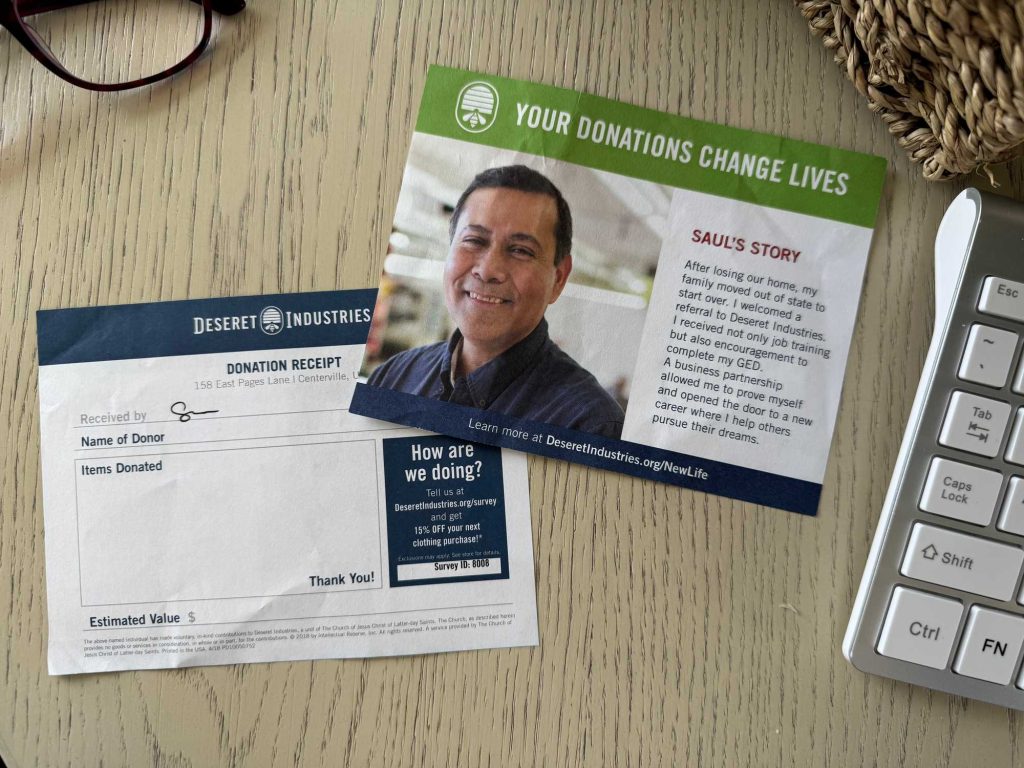
- Donating without documentation: For any gift over $250, you must get a written acknowledgment from the charity. No receipt, no deduction. It’s a simple but painful mistake.
- Giving random stuff: Donating old junk to Goodwill isn’t a huge tax win. For non-cash donations over $500, you need to file Form 8283. Over $5,000? You might need an appraisal. Honestly, it can get complex fast.
- Forgetting the standard deduction: Always run the numbers. If your itemized deductions (mortgage interest, state taxes, charitable gifts) don’t exceed the standard deduction, bunching is your friend.
Making It Part of Your Financial Flow
The goal here isn’t to turn you into a tax accountant overnight. It’s about integrating intentionality. Maybe you set up a small, recurring contribution to your DAF from each paycheck—like automating your savings, but for giving. Then, once a year, you look at your portfolio and see if you have any “winner” stocks to donate.
It becomes a system. Less emotional, more impactful. And it aligns your values with your wallet in a genuinely smart way.
In the end, tax-efficient charitable giving isn’t about being selfish. It’s about being a steward—of your own resources and of the funds you want to flow into the world. By giving smarter, you can actually give more. And that, well, that’s a legacy worth building, no matter your account balance.
About Author
